This idea has been on my mind for a while now. Ever since I heard the news that Algorithmic management, primarily known in the platform gig economy, where algorithms manage employees, is now being introduced in other sectors as well.
Being fired by an algorithm is not how I would have predicted the rise of AI in a company.
It’s unavoidable.
The bigger the company, the more challenges they face across all operations. With numerous silos, departments, processes, transactions, handovers, and documents, running a company without repetitive and tedious work is impossible. However, where there’s a lot of data, there’s also a great opportunity for optimization!
Drawing conclusions and making the right business decisions require extensive data analysis. And at a certain scale, performing these analyses manually becomes simply impossible.
Exploring what AI can do seems only logical. Historically, many companies moved from predictive analytics to Machine Learning. So AI seems unavoidable.
What is the next step?
We need to move on from wanting to become data-driven to wanting to become AI-driven.
To truly leverage the value contained in all that accumulated data, companies need to integrate artificial intelligence (AI) into their decision-making processes and, sometimes, remove human biases from the equation!
Anna Kendrick and George Clooney in the movie Up in the Air firing people
I still think that HR is not the department for AI, judging by how many TPS reports you have written.
All too human
Not so long ago, our judgment was the primary driver of business decision-making. We relied on self-belief, intuition, years of experience, fingerspitzengefühl, ying yang and a relatively tiny amount of data. Let’s be honest, experience and gut instinct were our main tools for discerning good from bad and risky from safe.
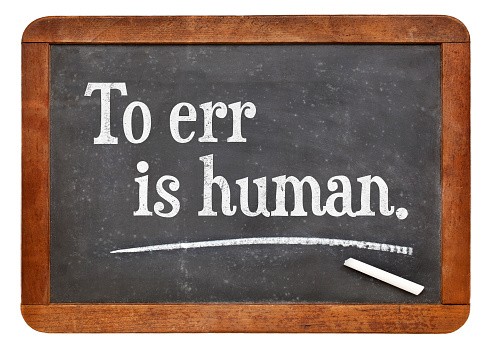
It was, perhaps, all too human. Relying on intuition as a decision-making instrument is far from ideal. Our brains are riddled with cognitive biases, impairing our judgment in predictable ways.
Summarizing the summary
We now capture unthinkable volumes of data: every click, every transaction, every customer gesture, all the information that should drive better decisions.
We reduce these vast volumes of data down to digestible summaries for consumption. Using time-tested tools like databases, spreadsheets, dashboards, and analytics applications.
Eventually, this highly processed, and now understandably small, data summary is presented for decision-making. This is the current “data-driven” way of working. We still decide, but now use summarized data.
Me biased?
We have dozens of ways cognitive bias plagues human judgment. We tend to give more weight to vivid or recent events, classify subjects into broad stereotypes, anchor on prior irrelevant experiences, and create explanations for events that are just random noise.
So once we have dealt with our biases, what else can go wrong?
Truth be told, our summarized data could obscure many valuable insights, relationships, and patterns contained in the original data. Just think about how you ask someone to present three scenarios and list what you want to see scored. The way you ask for a summary results in biased data sets.
I think that we need to experiment with AI. We don’t summarize ourselves, and we do not interface directly with data. We will interact with the possibilities produced by AI’s processing of the data.
Conclusion
As we start to see more and more experiments with AI integration into (HR) decision making processes, it becomes increasingly clear to me that for some processes human judgment is irreplaceable. I fear that we have many painful lessons still to learn.
AI driven data analysis combined with human decision making paints a powerful future picture. Where AI uncovers insights and patterns within vast datasets, and humans provide the contextual understanding and ethical considerations.
It’s essential to also recognize the inherent limitations and biases with algorithmic decision-making.
https://dealbreaker.com/2017/01/data-analytics-garbage-in-garbage-out
The old adage: Garbage in is garbage out still holds true.
Part of our future lies in a collaborative approach, where AI, like ChatGPT, supports our human capabilities rather than replaces them.


Leave a Reply