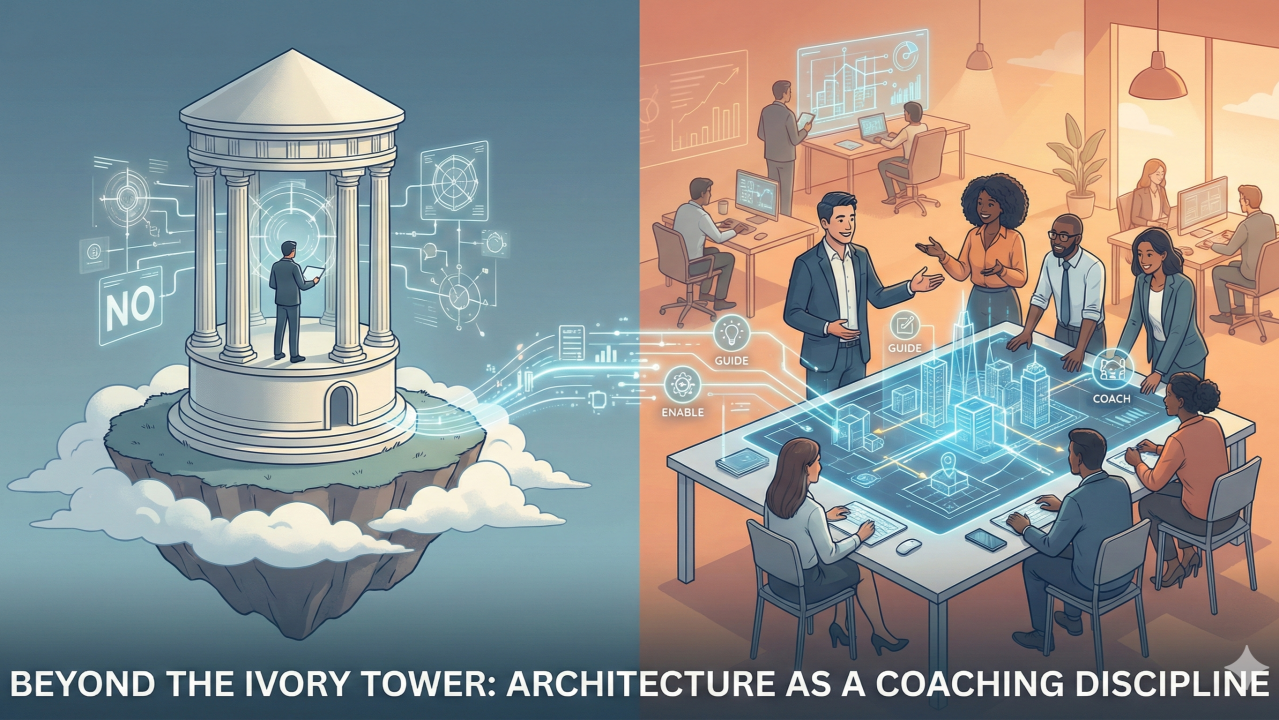
There is an old, persistent stereotype of the Enterprise Architect.
They sit in a metaphorical ivory tower, disconnected from the reality of the development teams. They draw perfect, complex diagrams of a future state that will never exist. And their primary output is the word “No.” As in “No, you can’t use that framework.” “No, that doesn’t fit the target architecture.” “No, that’s not approved.”
In the modern enterprise, this model of architecture is a caricature, it does not really exist. Or does it? However, you do not want a bottleneck that stifles innovation and frustrates people.
People will always find a way (Olifantenpaadje in Dutch)
To lead architecture effectively at scale, you must shift your identity. Or as I like to say. Find a new hat. You are no longer waring the Chief Enforcer hat. You are the Chief Enabler.
From Gatekeeper to Guide
The most effective Chief or Lead Architects I’ve known did’nt spend their days reviewing every single design document. They spend their days coaching the people who wrote them. They had an office near the coffee machine so they could call people in. And the main furniture was not an imposing desk but a round table to host discussion.
If you find yourself constantly saying “No,” it’s a sign of a deeper problem. It means your architecture community doesn’t have the mandate to operate with trust and they don’t understand the why behind the rules. It means the guardrails aren’t clear, or they are too constrictive.
As a Lead Anything, it is your job is to define the boundaries of risk, compliance, and strategy. And then empower people to play within them. This shift from policy to principle is transformative. It builds trust. It gives people autonomy and ownership, which is far more motivating than blind obedience.
The Power of “Constructive No”
This doesn’t mean you never say “No.” As I’ve said before (being a blunt Dutch guy, can be useful, sometimes), “No is still a valid answer”. But the nature of the No changes. It becomes a coaching moment or a discussion to learn more about each other viewpoints.
Instead of a flat rejection, it becomes a dialogue: “Okay, I see why you want to use that new RAG retriever. It’s fast. But have you considered how it will integrate with our core xyz feature? Let’s explore the long-term implications together.”
You are helping them to think end-to-end, to see the whole board, not just their individual piece. You are helping them balance their local optimization with the global goals of the strategy.
Embracing the Power of Differences
Another critical aspect of modern architectural leadership is fostering a culture of debate.
The best architectural decisions do not come from a single, brilliant mind issuing decrees from above. They come from a diverse team that feels safe enough to challenge each other’s assumptions.
If everyone on your architecture board thinks the same way, has the same background, and agrees on everything, you are heading for disaster. You need the security expert to clash with the user experience advocate. You need the mainframe (yep, still here) veteran to debate the cloud-native enthusiast. Sometimes you need to design for friction. Especially in your teams.
Your role as a leader is to facilitate these debates productively, to ensure all voices are heard, and then to synthesize a path forward that everyone can commit to. This isn’t design-by-committee. It’s design-by-collaboration.
The Ultimate Metric
Ultimately, the success of a Lead Architect isn’t measured by the perfection of their diagrams. It’s measured by the growing capability and maturity of their team. And the rising quality of their work.
Leave a Reply